Our Work
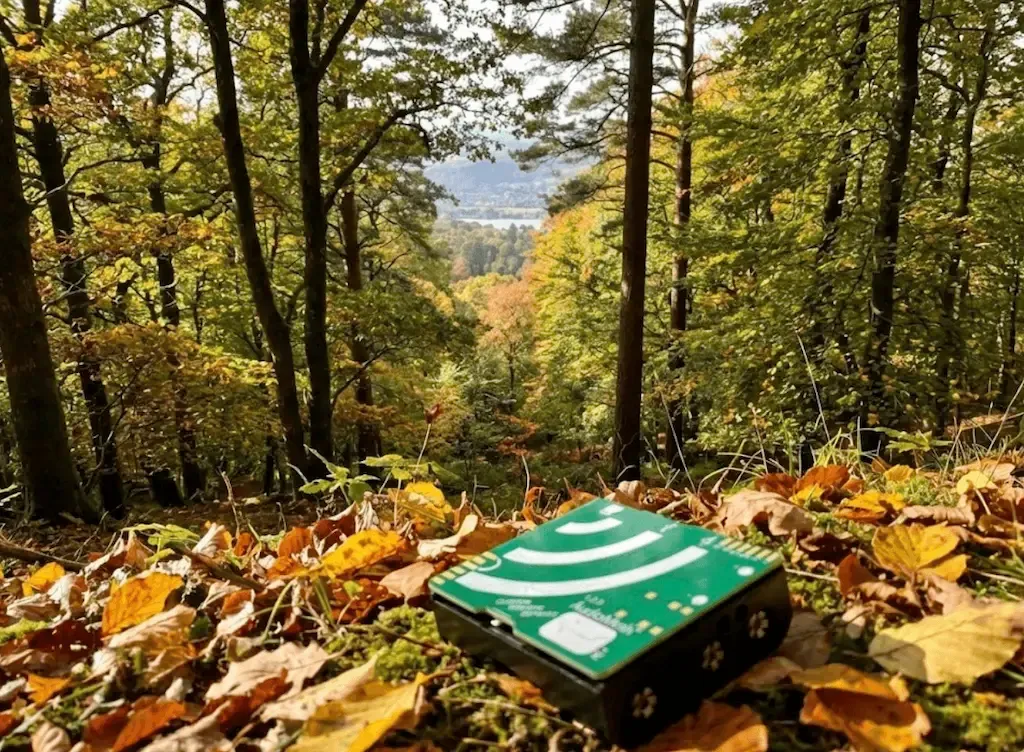
We have a number of acoustic monitors that can be used in different settings. Some run continuously through the year, identifying birdsong in real time; others can be used remotely to gather baseline recordings that will be analysed later.
Lake District National Park
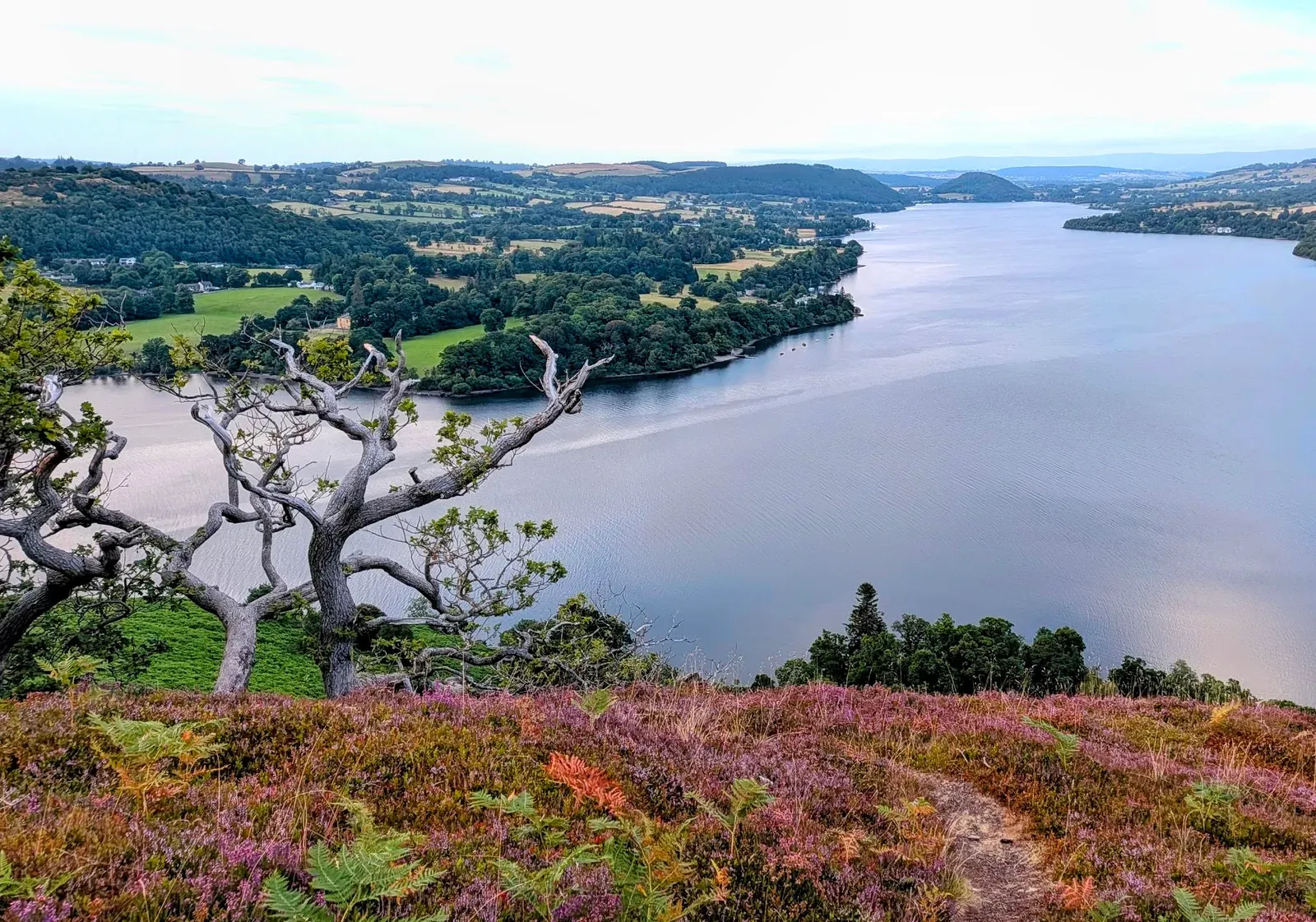
Our first installation has been running continuously at the Lake District National Park's offices near Kendal since mid 2025. In a typical month it logs roughly 18,000 detections across 50+ species, the kind of record a handful of site visits can't really approximate.
The same device runs a small staff dashboard: what's been heard today, which species are turning up more or less often this month, and a searchable detection log with audio clips. No specialist software needed.
That first monitor is no longer alone: we've since installed two more monitors with the National Park, bringing the total to three.
The Digital Bird Hide
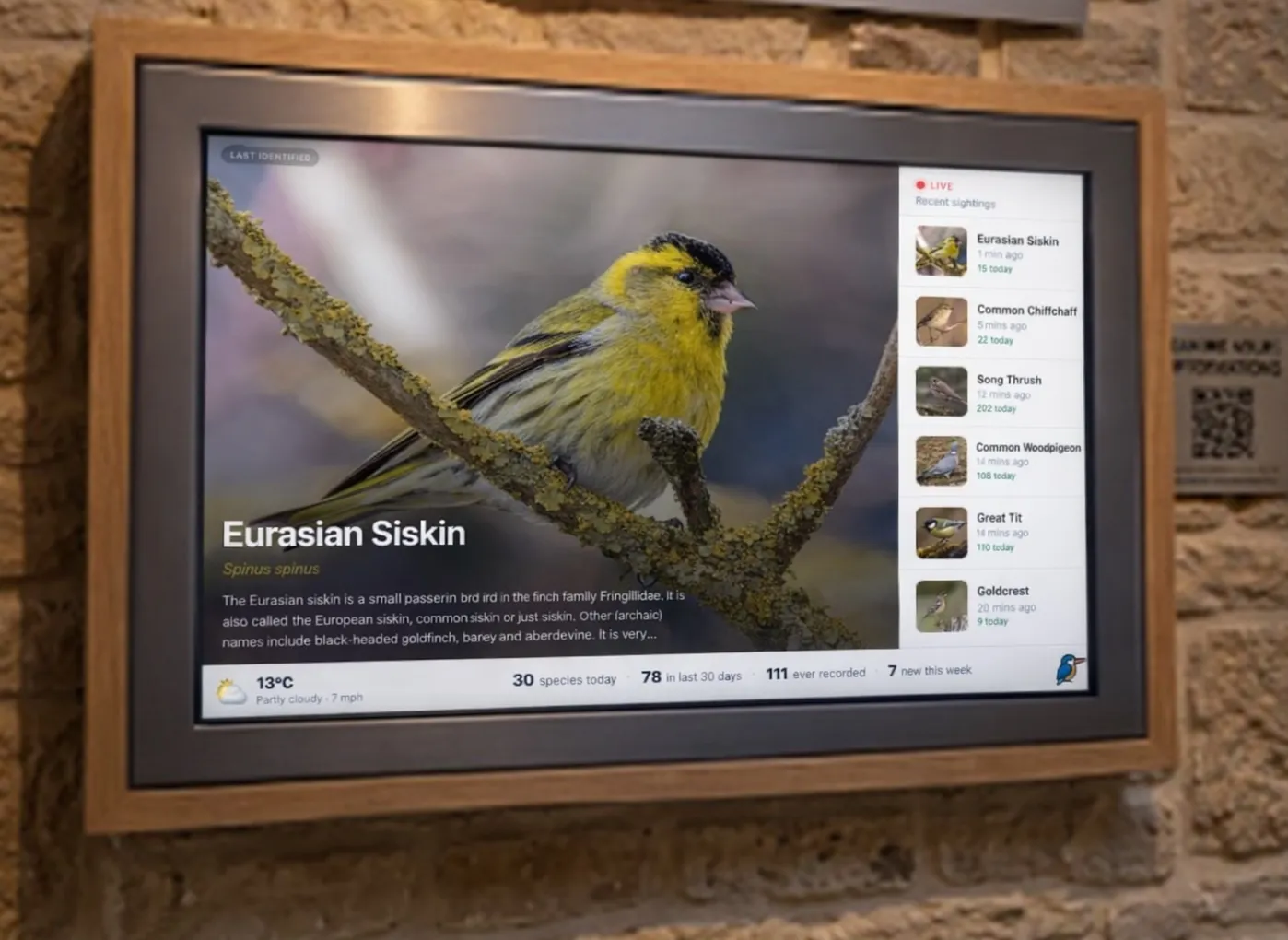
A bioacoustic monitor that hears the birds on your site, paired with a display that shows your visitors what it's hearing, in real time.
When a Siskin calls, the public screen lights up within seconds, showing its name, a photo, and a few facts about the bird.
It works particularly well for visitor centres and reserves that want something tangible to show the public, and rewilding estates that want a continuous record that their work is making a difference.
Detections are powered by BirdNET, a machine learning model from the Cornell Lab of Ornithology. Everything runs locally on a micro-computer, so your data stays with you, in open formats. All historic data is also saved, providing valuable insights over time.
Off-grid acoustic surveys
Not every site has mains power or mobile signal, which means a live monitor isn't always an option. For those places we deploy Passive Acoustic Monitoring (PAM) kit: small, battery-powered recorders that sit quietly in the habitat for weeks at a time, and come back with us afterwards for processing.
The audio runs through the same species-identification model the Digital Bird Hide uses, and the output is a baseline species inventory for the site. That tends to be useful for ecologists and land managers working on habitat condition monitoring, pre-intervention benchmarks, or Biodiversity Net Gain assessments.
We recently ran a short baseline assessment near Keswick, covering different habitats, such as broadleaved woodland, neutral grassland, and scrub, ahead of a longer-term restoration plan.